A beautiful crystal should come with a clear description. Before considering colour, symbolism or price, find out what the material actually is and how it has been processed.
This guide helps you choose natural crystals and gemstone jewellery with more confidence, whether you are buying your first bracelet or a meaningful gift.
These distinctions describe different things. “Natural” does not automatically mean “untreated,” and a laboratory-grown gemstone is not the same category as a glass imitation. The important point is accurate disclosure.
For online purchases, request clear photographs in ordinary lighting and a view of the whole item. Very warm light, filters and extreme close-ups can make colour or size difficult to judge.
Natural stones can vary in colour and pattern, but variation is not proof of natural origin. Inclusions and fractures can occur in more than one kind of material. Conversely, an attractive, relatively clean stone is not automatically fake.
Being cold to the touch, feeling heavy, or showing a particular pattern in a phone photograph is not a reliable identification test. Avoid scratch, flame or chemical tests: they can damage a piece without establishing what it is.
If a purchase is costly or authenticity is disputed, an independent gemological laboratory is a better route than a home test. Check what any report actually covers and whether it identifies the item being sold. A generic “certificate of authenticity” is not equivalent to an independent identification report.
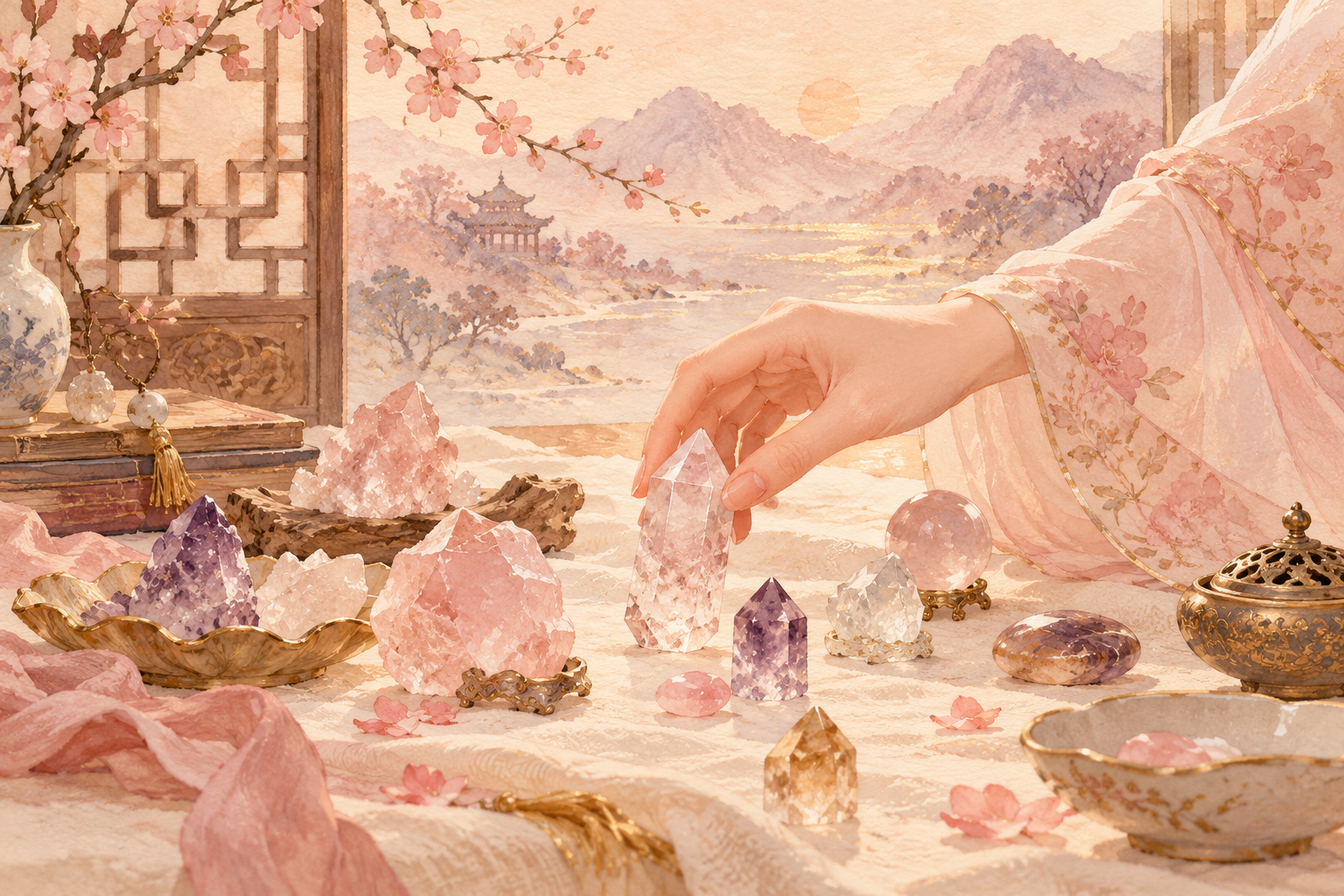
GIA explains that naturally yellow quartz is uncommon and much commercial citrine results from heat treatment of amethyst. That does not make every such stone glass or plastic; it means treatment disclosure matters. Ask whether “natural citrine” means naturally formed quartz, naturally occurring colour, or both.
The same habit helps with other materials: ask a precise question rather than relying on an attractive label.
Consider the whole piece, not just the stone. For a bracelet, check fit, bead diameter, elastic or clasp construction, and whether metal components suit your skin. For a ring or pendant, inspect the setting and how exposed the stone is to knocks.
Gemstones differ in hardness, toughness and sensitivity to heat, light or chemicals. Ask for care instructions specific to the material and any treatments. Do not assume that every crystal can be soaked in salt water, left in strong sunlight or cleaned ultrasonically.
You may prefer rose quartz as a reminder of tenderness, amethyst for reflection, or tiger's eye for purposeful action. Those symbolic associations can make a piece personal. They do not establish its origin, quality or ability to produce a particular outcome.
Start with a colour you enjoy, a form you will actually wear and a meaning that feels relevant. Read our guide to crystal meanings to explore different intentions.
Before checkout, you should be able to name the material, understand any disclosed treatment, visualise the size and fit, and explain the seller's care and return terms. If a seller cannot answer basic material questions, take time before committing.
A meaningful crystal purchase combines beauty, clear information and a choice that suits your life.
You can use this checklist while exploring our crystal jewellery collection.


Explore our latest collections. Each piece is crafted with precision and designed to complement your unique style.