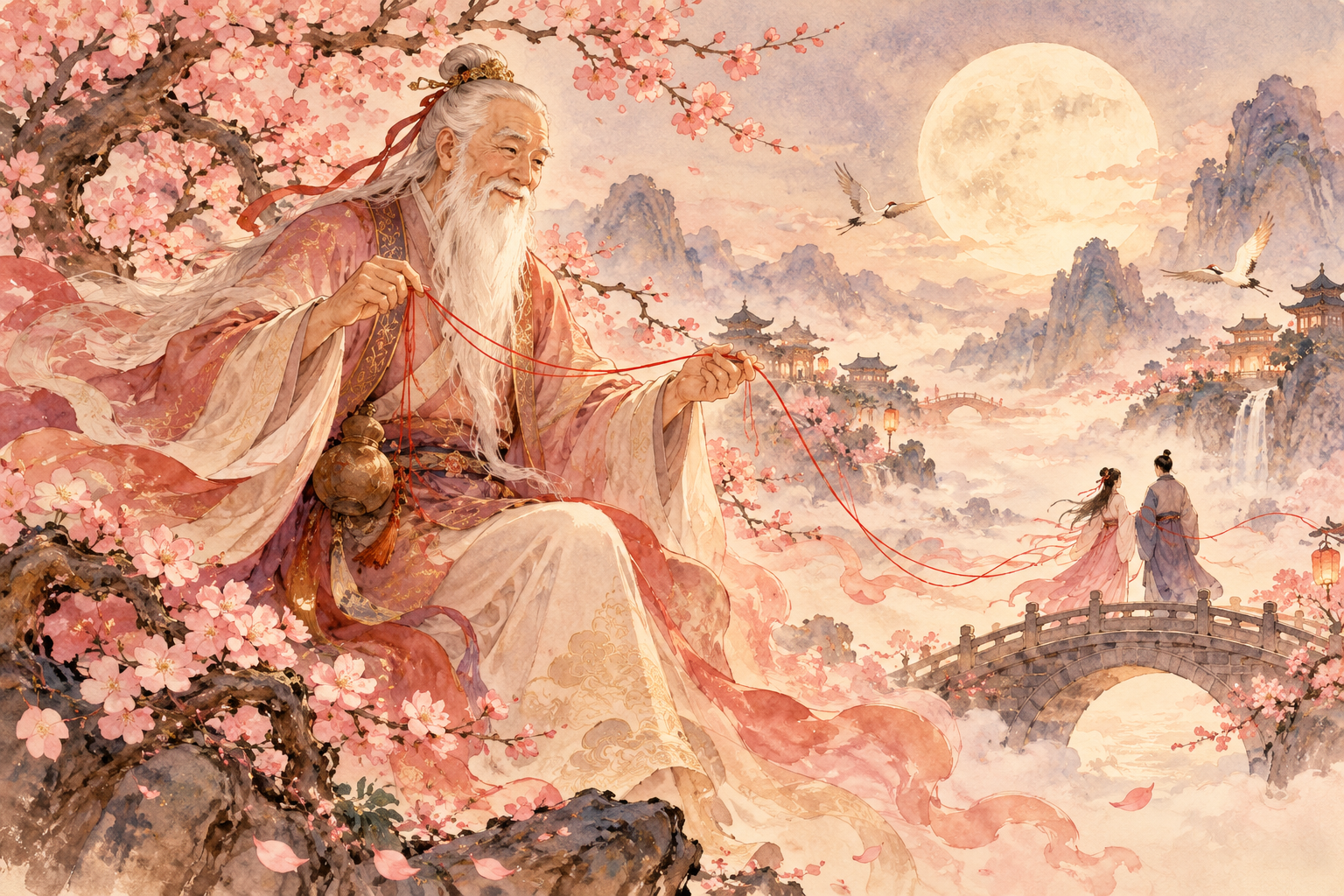
Your birth chart describes a starting pattern. The Five Elements explain relationships within that pattern. Da Yun adds a longer view of how the chart is interpreted across different stages of life. Understanding these three ideas makes a BaZi reading easier to follow.
BaZi (八字) means “eight characters.” Your birth year, month, day and hour form the Four Pillars. Each pillar contains a Heavenly Stem and an Earthly Branch, giving eight characters in total. The stem of the day pillar is called the Day Master and serves as a reference point for interpretation.
BaZi goes beyond your Chinese zodiac animal. A practitioner considers the whole chart: seasonal context, the relationships between stems and branches, and the changing cycles of time. For an introduction to the birth information involved, read What Is BaZi, and Can You Have a Reading Without a Birth Time?
Wood, Fire, Earth, Metal and Water are often called the Five Elements, or Wu Xing (五行). In this tradition, they describe interacting phases and qualities rather than five literal ingredients inside a person.
These associations are an introduction, not a personality test. The same element can be interpreted differently depending on its relationship to the Day Master and the rest of the chart.
The generating cycle runs Wood → Fire → Earth → Metal → Water → Wood. The controlling cycle runs Wood → Earth → Water → Fire → Metal → Wood. A reading considers how these relationships operate in context, alongside yin and yang, season, roots and other chart features.
“Balance” does not mean that everyone needs exactly the same amount of all five elements. An element’s usefulness cannot be established by counting characters alone.
Not automatically. An element may be absent from the visible stems yet appear in the hidden stems of a branch. Its absence also does not by itself make it favourable. A careful interpretation assesses the complete structure before discussing supportive or challenging influences.
Wearing a colour or crystal associated with an element does not change your birth chart or guarantee a result. You may use such objects as personal symbols, while keeping their symbolism separate from chart calculation.
Da Yun (大运), often translated as “major luck” or “ten-year luck cycles,” is a sequence of stem-and-branch pillars used to interpret longer phases of life. Each pillar conventionally covers roughly ten years. The word “luck” here does not mean that an entire decade will be fortunate or unfortunate.
Practitioners interpret a cycle in relation to the natal chart. It may bring different themes into focus, such as responsibility, learning, expression, relationships or resources. The same cycle pillar can be interpreted differently for different people.
The first cycle does not necessarily start at birth or on a tenth birthday. Its starting age is calculated using a chosen convention, commonly involving the interval between birth and a relevant solar term. Schools differ in direction and timing conventions, so the calculation method should be clear.
For example, a practitioner might interpret a decade as emphasising professional responsibility, while an individual year draws attention to learning or collaboration. This is an illustration of the method, not a prediction of a promotion or job offer. The layers are read together rather than as separate “good” and “bad” labels.
This approach can be used to explore core tendencies, the Five Elements in context, recurring patterns in work and relationships, and themes associated with longer life cycles. A useful reading explains which chart features support its interpretation and turns those observations into questions and practical guidance.
It should help you reflect on how you act, communicate and respond to change. It cannot guarantee marriage, wealth, career success or an event on a particular date. BaZi is a traditional metaphysical practice, not a scientifically validated forecasting method.
Prepare your birth date, the most reliable birth time available and your birthplace. State whether the date is Gregorian or lunar, including leap-month information where relevant. A nickname is sufficient for the reading.
Historical time zones, daylight-saving rules and the chosen solar-time convention matter near chart boundaries. If the time is uncertain, provide the known range rather than inventing an exact hour. Missing time can affect the hour pillar, the structural interpretation and the calculated start of Da Yun.
Explore Life Blueprint for a broader birth-chart perspective, or This Year for an annual focus. If your question concerns two people, our Compatibility reading combines BaZi and Zi Wei Dou Shu.
The Hong Kong Observatory explains the calendrical stems, branches and Four Pillars in Heavenly Stems and Earthly Branches. For the traditional interpretive framework, consult San Ming Tong Hui (三命通会), including its discussions of the Five Elements and major cycles. Calendrical evidence and traditional texts explain the system; they do not establish the accuracy of its predictions.


Explore our latest collections. Each piece is crafted with precision and designed to complement your unique style.